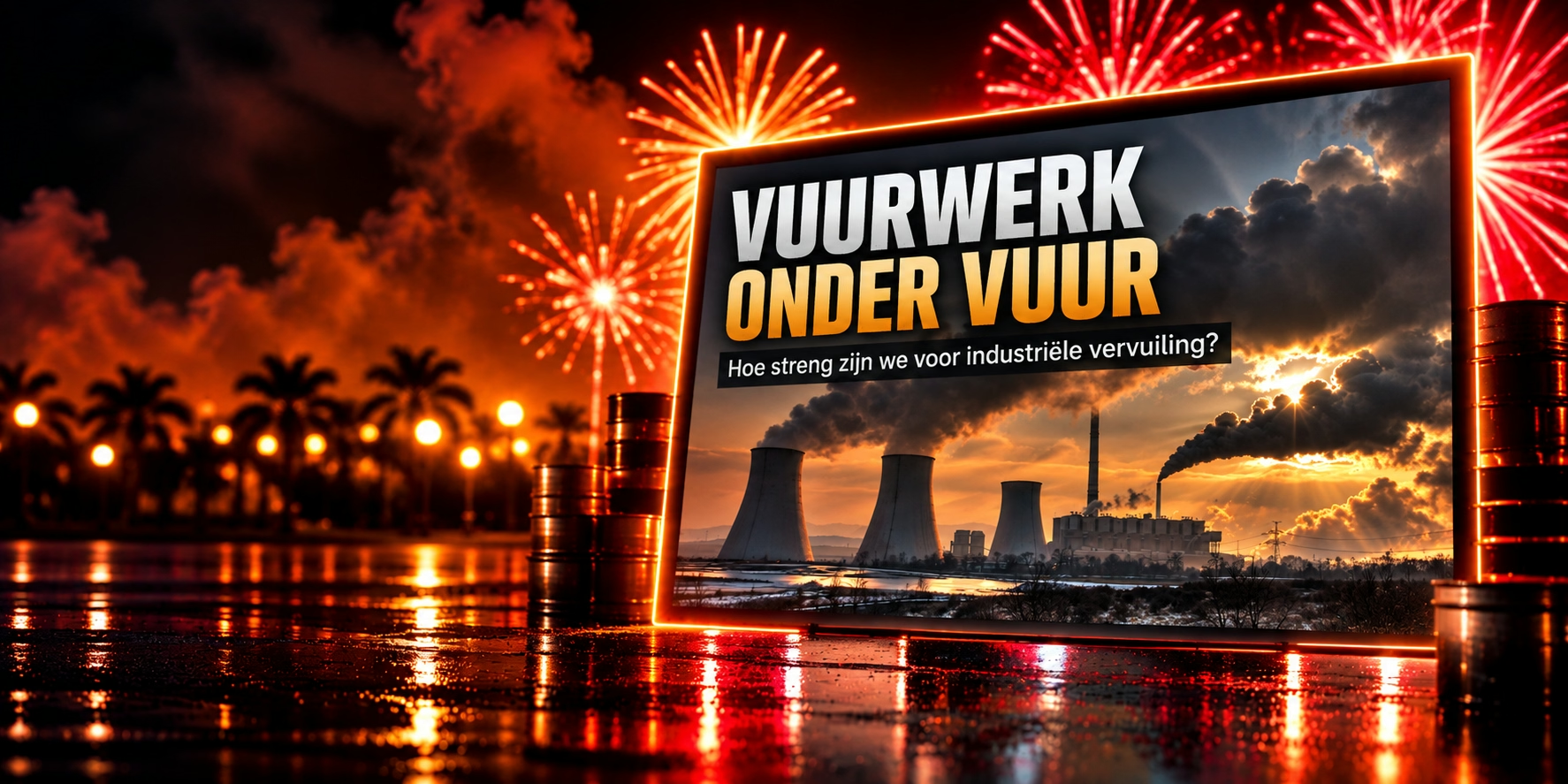
Fireworks and industry: why the double standards?
Every year around New Year, the same thing happens. As soon as the gunpowder smoke of 1 January clears, the argument erupts. The media are full of it, talk shows point fingers and politicians express outrage: fireworks are an environmental disaster. Figures are thrown around. “As much particulate matter as all cars produce in seven months!” And yes, that sounds enormous. But when you dare to put those figures into perspective, you see just how hypocritical this discussion is.
We collectively get worked up about that one night of fireworks each year. Meanwhile, we cheerfully get into our cars the next morning and look away while industry pumps toxins into our surroundings 365 days a year. Why such extreme double standards?
The blind spot for everyday reality
Let’s start with the figures people love to throw around. Yes, fireworks cause a huge spike in particulate matter within a few hours. But what the anti-fireworks lobby rarely mentions is that fireworks are barely measurable in national statistics for CO₂ emissions and climate change: less than 0.0001%.
The real damage to our climate does not come from those few rockets and firecrackers on New Year’s Eve. It comes from the millions of cars sitting in traffic every day, the trucks delivering our parcels, and the distribution centres and factories running around the clock to keep our economy going. That is a continuous, crushing burden on the planet. But because it has become “normal” and we all benefit financially, nobody talks about it on 1 January.
Living in toxic filth all year round
The easiest argument against fireworks is always: “They harm the health and lungs of vulnerable people.” That is true; the peak exposure is very intense for people with asthma. But if health really is our highest priority, why do we accept the situation of thousands of Dutch people living next to heavy industry?
Take the neighbours of Tata Steel in the IJmond region, or chemical giants such as Chemours in Dordrecht. Solid RIVM reports show that people living nearby demonstrably develop serious diseases such as lung cancer and cardiovascular disease more often. For them, the pollution does not simply blow away. For them, it is not a temporary spike lasting a few hours. For them, living next to such a factory means an invisible “fireworks display” of toxins, heavy metals and PFAS 365 days a year — without the pretty colours or festive atmosphere.
Why don’t we demand an immediate ban or complete closure for those families with the same aggression? Why are those emissions allowed to continue for decades?
Out of sight, out of mind
The problem with fireworks is that they are so visible and tangible. You hear the bangs, smell the powder and see the haze in your own street. It feels close to home. Pollution from a factory or motorway disappears high into the air through tall chimneys and exhaust systems. It is invisible, and what we cannot immediately see or smell is much easier to ignore.
Fireworks have therefore become the perfect scapegoat. They offer an easy distraction for the government: take away people’s celebration, and it looks as if you are working hard to make society greener.
Conclusion
Of course fireworks are not good for the environment or nature. And it is perfectly reasonable to consider how traditions could become cleaner. But let’s stop this selective outrage.
As long as we protect industry’s persistent major polluters and accept entire neighbourhoods becoming chronically ill from factory operations, the fireworks debate is symbolic politics at its finest. Anyone who truly cares about the environment and people’s health does not just look up at New Year, but looks critically at their surroundings throughout the year.